Nowara Infotech

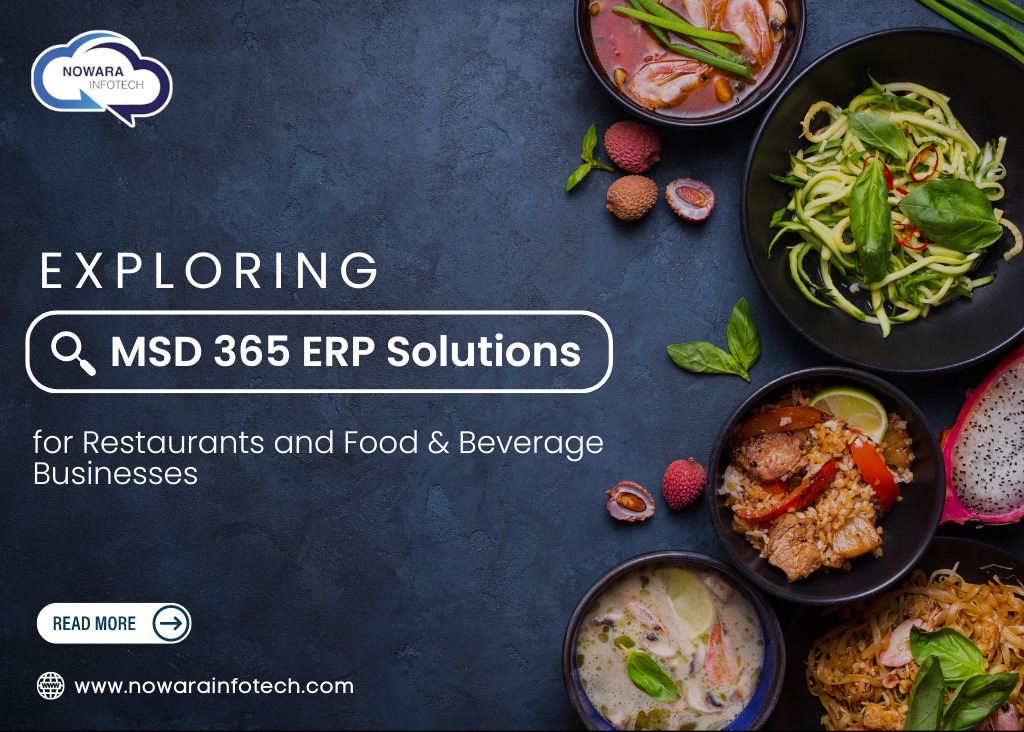
Exploring ERP Solutions for Restaurants and Food & Beverage Businesses

Exploring Microsoft Dynamics 365 ERP Solutions for Restaurants and Food & Beverage Businesses

Whether you run a cosy cafe or a bustling restaurant chain, staying on top of operations is crucial in this competitive field. Did you know that 60% of restaurants fail within their first year? And those that survive often struggle with managing inventory, orders, and finances efficiently. But fear not! Food and beverage ERP solutions offer a lifeline, streamlining processes and boosting productivity. Let’s discover how these solutions can transform your business. What Is A Food And Beverage Business? A food and beverage business is a company that sells food and drinks. This can be anything from a small café to a big restaurant chain. They make and serve food and drinks to customers for money. Examples include restaurants, coffee shops, bars and much more. What Is ERP Solutions For Restaurants And Food & Beverage Businesses? Food and beverage ERP software solutions are like magic tools. It helps restaurants and food businesses manage everything they need to do their job well. Imagine running a restaurant or a food business is like driving a car. ERP solutions are like having a really good GPS in your car. They help you know where you are, where you need to go, and how to get there smoothly. These solutions help with lots of tasks. They help keep track of how much food you have, what ingredients you need to buy, and when to order them. They also help with keeping an eye on how much money is coming in and going out. Plus, they can help with taking orders, managing staff schedules, and even analyzing which dishes are popular. So, in short, food and beverage ERP solution are like having a clever assistant that makes everything run smoothly, so you can focus on making delicious food and keeping your customers happy. An ERP solution for the food and beverage industry helps businesses manage their inventory, create invoices, handle supply chains, get real-time insights, and manage payroll. Instead of using lots of different programs for each job, everything is in one handy place with an ERP system. Future Trends with Microsoft ERP For Food And Beverage Industry In the ever-evolving landscape of the food and beverage industry, staying ahead of trends is crucial for success. With the integration of Microsoft ERP solutions, businesses can anticipate and adapt to these future trends effectively. The integration of ERP for food and beverage industry is poised to drive significant advancements and address emerging challenges. By leveraging data analytics, automation, IoT, AI, and mobile capabilities, businesses can stay ahead of the curve, deliver exceptional customer experiences, and foster sustainable growth in the rapidly evolving market landscape. Challenges In The Food And Beverage Business Running a food and beverage business isn’t all cupcakes and rainbows. There are some tricky challenges that restaurant owners face every day. Let’s take a closer look at what makes the food and beverage industry a bit tough: These challenges might seem daunting, but with the right strategies and tools, they can be overcome. That’s where food and beverage ERP solutions come into play, helping businesses tackle these obstacles head-on and thrive in the competitive landscape.Nowara- Best Food And Beverage ERP Solutions Provider Choosing the right ERP (Enterprise Resource Planning) system can be a game-changer for your restaurant or food and beverage business. It streamlines operations, automates tasks, and gives you a clear view of everything from inventory to finances. Nowara Infotech is one of the best ERP software solutions providers built specifically for the food and beverage industry. Their systems are designed to address common challenges like: Inventory Management: Track ingredients, prevent spoilage, and optimize ordering.Recipe Management: Standardize recipes, ensure consistency, and easily scale production.Production Planning: Forecast demand, schedule production efficiently, and avoid stockouts.Financial Management: Gain real-time insights into your finances, streamline accounting, and make better business decisions.Ready to explore how Nowara Infotech’s ERP solutions can help your food and beverage business thrive? Contact Nowara Infotech today for a free consultation!
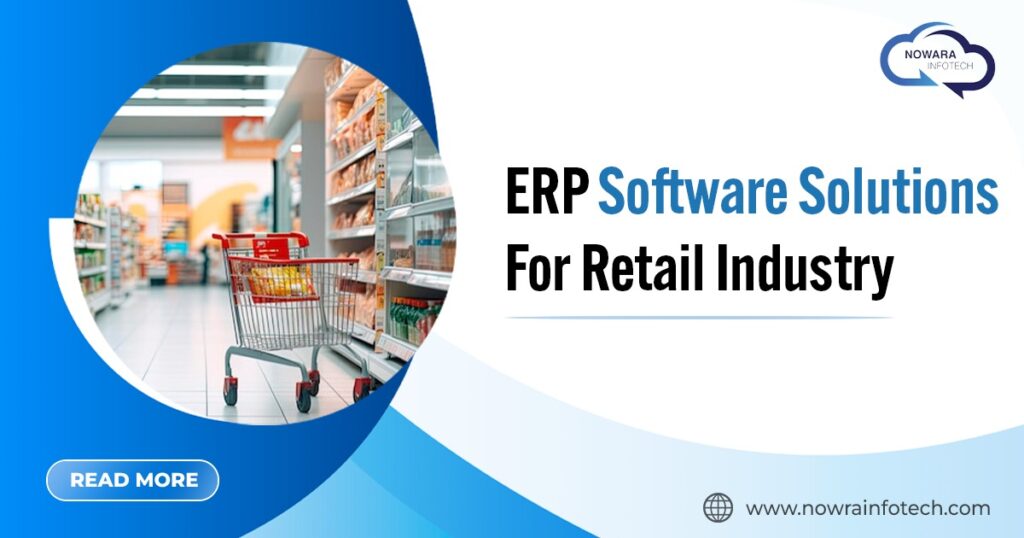
Maximize retail operations in 2024 with ERP for retail industry. Discover how POS-based ERP systems revolutionize efficiency. Find the perfect solution today!

POS-Based ERP Software For Retail Industry In 2024

The retail landscape is undergoing a rapid transformation, driven by evolving customer expectations and the relentless pace of technological innovation. In this dynamic environment, retailers are increasingly turning to Point-of-Sale (POS)-based Enterprise Resource Planning (ERP) software as a strategic weapon to gain a competitive edge. According to a recent study, 87% of retailers believe that implementing an ERP system is crucial for their business growth. This statistic underscores the growing recognition of the transformative potential of POS-based ERP solutions in the retail industry. This article delves into the transformative power of POS-based ERP for retail industry, exploring its functionalities, key selection criteria, and future trends. We’ll also unveil the next generation of POS systems, poised to revolutionize retail management. What Is The Use Of POS-Based ERP Software For The Retail Industry? ERP, or Enterprise Resource Planning, is a system that integrates all facets of a business, including planning, inventory, sales, marketing, finance, and human resources. When this system is combined with a Point of Sale (POS) system, it becomes a powerful tool for the retail industry. A POS-based ERP for the retail industry, system can streamline operations, improve inventory management, enhance customer service, and increase overall productivity. It provides real-time data, which can be used to make informed decisions, forecast trends, and strategize effectively. How To Select The Top POS For Retail? When selecting a POS for retail, consider the following factors: What Is The Future Of POS Systems? The future of POS systems lies in their ability to adapt to new technologies and changing consumer behaviours. We can expect to see more cloud-based solutions, mobile POS systems, and AI-powered analytics. Integration with e-commerce platforms will become even more seamless, and personalized customer experiences will be the norm. What Is The Next-Gen POS System? Next-gen POS systems will be more than just transactional tools. They will be complete retail management systems, offering everything from inventory management to customer relationship management. They will leverage AI and machine learning to provide predictive analytics, helping retailers anticipate customer needs and market trends. Nowara- One Of The Best POS ERP Software For The Retail Industry Nowara offers a comprehensive POS-based best ERP solution solutions provider designed to streamline operations, optimize inventory management, and empower data-driven decision-making. Their robust platform caters to the specific needs of retailers, regardless of size or industry, and boasts features like: Ready to unlock the full potential of your retail business? Contact Nowara today to schedule a demo and discover how their innovative POS-based ERP solution can help you achieve operational excellence and drive sustainable growth.

ERP for printing and packaging industry

Your Expert Guide To ERP For The Paper & Packaging Industries

The printing and packaging world is booming—a whopping $450 billion market by 2025! But amidst the excitement, it’s easy to get tangled in a web of complex projects, diverse materials, and tight deadlines. Here’s where the real challenge lies: taming inventory chaos. One misstep—running out of key materials or overspending on unused ink—can derail production, strain budgets, and leave customers fuming. Do you also suffer from this problem in your printing and packaging industry? Then ERP (Enterprise Resource Planning) software is a magic wand that brings your entire inventory to life, tracking every sheet, box, and ink droplet effortlessly across all operations. It sounds like a dream, right? Well, for businesses wielding ERP, it’s a reality! Let’s dive into how ERP for printing and packaging industry helps them become masters of inventory management and conquer the printing and packaging worlds. How Does ERP for printing and packaging industry Help?  1. Visibility Of Inventory In Real Time: Put an end to laborious spreadsheets and disorganised data. ERP provides an up-to-date view of your inventory at all locations, including raw materials, work-in-progress, and finished goods. You receive incredible control and transparency with the instantaneous reflection of every purchase, production run, and sale. 2. Magic Of Demand Forecasting And Replenishment: ERP for manufacturing industry is a proactive partner rather than only a watchful observer. The demand for particular materials and packaging types is predicted for the future through an analysis of past data and industry trends. This gives you the ability to maximise inventory levels, preventing expensive stockouts and cutting down on needless holding expenses. 3. Simplified Management Of Suppliers And Procurement: No more rushing to find supplies at the last minute. ERP optimises delivery schedules, tracks supplier performance, and automates purchase orders. By doing this, you may lower procurement expenses and cultivate strong supplier relationships while ensuring that you receive the necessary goods at the right time and price. 4. Steroid-Assisted Production Scheduling And Planning: Software for scheduling and production planning easily interfaces with ERP. It helps you to maximise production runs and reduce waste by giving precise information on available materials, where they are located, and lead times. Bid farewell to traffic jams and welcome to timely, effective delivery. 5. Sustainability & Waste Reduction: Responsibly managing materials is essential in today’s environmentally sensitive world. ERP tracks material usage optimises cutting patterns, and streamlines manufacturing processes to help you find and cut waste. This helps save money in addition to helping the environment. 6. Analytics & Reporting For Data-Driven Choices: ERP for printing and packaging industry provides priceless insights into your operations in addition to managing inventory. You can monitor production efficiency, evaluate supplier performance, and spot inventory patterns with the help of comprehensive reporting and analytics tools. This gives you the ability to make data-driven decisions that maximise profitability and inventory management. The ERP Benefit: Exceeding Stock In the vibrant world of printing and packaging, where deadlines dance with diverse materials, keeping your inventory in perfect harmony can be a challenge. ERP for printing and packaging industry is your maestro, conducting a symphony of advantages that puts inventory management at the centre stage. Imagine happy customers receiving accurate quotes, timely deliveries, and consistent quality thanks to optimised stock levels. ERP’s magic wand waves away stockouts, leading to improved cash flow and profitability.  Real-time data becomes your musical score, streamlining procedures and boosting production, making your business more agile than ever. Finally, departments sing the same tune, communicating seamlessly through a centralized platform. So, why wait? Let ERP transform your printing and packaging business into a masterpiece of efficiency and customer satisfaction. Why Nowara Infotech’s Microsoft Dynamics 365 BC Is The Best Option For The Paper And Packaging Industries: Ready to unleash your paper and packaging power in this ever-evolving market? Nowara Infotech is your expert co-pilot, not just offering software, but also guiding you on your entire ERP software for packaging industry journey: Don’t wait another minute to unlock your full potential. Contact Nowara Infotech today and embrace ERP excellence!

How To Implement Microsoft Dynamics CRM?

How To Implement Microsoft Dynamics CRM?

Everybody knows how important a strong client relationship is for businesses in this cutthroat, competitive industry. To manage and cultivate such client relationships, Microsoft Dynamics CRM provides a powerful toolkit for successful planning and execution. It shows that over 29,240 companies will be using Microsoft CRM in 2024 to improve their business performance. To develop a healthy relationship with your client and grow your business, you must effectively apply an ERP solution.  With this blog’s help, you can put Microsoft Dynamics CRM into practice and take your customer interactions from transactional to genuinely transformative, realising their full potential. Unleash The Benefits Of Microsoft Dynamics CRM Microsoft Dynamics CRM is software that centralises all your customer information, like contacts, interactions, preferences, etc., which helps create a strong relationship with your clients. It also helps to automate repetitive tasks, nurture leads with targeted campaigns, and close deals faster with intelligent sales tools. In addition, this helps in generating powerful reports and dashboards that unveil customer trends and hidden opportunities. It’s like having a crystal ball for your business, guiding you towards smarter decisions and maximised growth. Your Step-By-Step Guide To Implementing Microsoft Dynamics CRM How you implement Dynamics CRM plays a significant role in its achievement. The following eight actions are necessary for a successful implementation: 1. Establish Your Company’s Requirements (The Blueprint): Just imagine constructing a house without a blueprint. The implementation of CRM is no different. Begin by posing the question: What are the weak places in our customer interactions? What particular objectives do we hope to accomplish, such as a 20% rise in revenue or a 15% improvement in customer satisfaction?  What information, such as client demographics, purchase history, and support requests, do we need to monitor and analyse? Your implementation plan is created by responding to these questions, which guarantees that your CRM works in harmony with your company’s objectives. 2. Select Your Champion (The Ideal Match): Microsoft Dynamics 365 Business provides a range of CRM options, each meeting distinct requirements. Take into account these elements: Size of company: Dynamics 365 Customer Service may be advantageous for small firms, whereas Dynamics 365 Sales Enterprise may be necessary for large corporations. Industry: Tailored functionality is available in industry-specific solutions such as Dynamics 365 for Healthcare or Retail. Budget: The cost varies based on user licences and features. 3. Put Together Your Dream Team Or Avengers: 4. Data Migration: Transferring Precious Items: Imagine moving your entire home without losing everything. The migration of data is comparable. Make a detailed plan: 5. Personalisation: Customising Your CRM: Consider your MS CRM software as an adaptable outfit. Workflows, dashboards, and security settings can be adjusted to meet your unique requirements. Here’s where having your blueprint comes in handy! 6. Empower Users With Your Heroes: Superheroes of all skill levels require training. Provide thorough instruction on the features of the platform, recommended procedures, and designated user responsibilities. Keep in mind that user adoption is essential to success! 7. Check and Proceed: All set to go live! Do extensive testing before releasing your CRM to the public. Before a launch, user acceptance testing, or UAT, assists in finding and fixing any problems. 8. Never Stop Improving:  After launch, your CRM adventure is far from over. Track results, get input from users, and adjust your implementation in light of new information. Remember that optimising the value of your CRM requires constant improvement. Samadhan Microsoft Dynamics CRM: Your Trusted Source  Microsoft Dynamics CRM implementation can be complex. Remember that continuous optimisation, teamwork, and preparation are necessary for a successful implementation. You may build better client interactions, accelerate business growth, and acquire a competitive edge by using Dynamics 365. Consider partnering with a Microsoft Gold Certified Partner, Samadhan. Our expertise can ensure a smooth transition, maximise system value, and optimise your customer relationship management strategy. Contact us now! FAQs ( Frequently Asked Questions)  Microsoft Dynamics CRM has a lot of advantages, such as: The price changes according to several variables, including The CRM solution of choice: Dynamics 365 provides a range of choices at varying price points. A cross-functional team comprising members from relevant areas such as IT, customer service, marketing, sales, and customer support is required. For professional advice and assistance, think about collaborating with Samadhan, a Microsoft Gold Certified Partner. The complexity of your project will determine how long it takes to implement it. While larger projects can take months to complete, simpler setups can be finished in a matter of weeks. Thorough preparation and testing are essential for a successful deployment. Clearly state your goals and objectives. Select the CRM option that best suits your requirements.  

manufacturing ERP software

Best ERP Software For Construction Industry In India – 2024

A report proves that 67% of construction companies use ERP software! In the quickly evolving Indian construction industry, efficiency and dependability are now essential for success. To stay ahead of the competition in this industry, construction companies are turning more and more to Enterprise Resource Planning (ERP) software. Construction companies that use ERP software report many benefits like improved project efficiency and increased profitability. In this blog post, we will go over the key considerations to make while choosing the best ERP software for construction industry in India in 2024. Understanding ERP In the Construction Industry ERP software also known as Enterprise Resource Planning (ERP), is software that helps companies manage their businesses effectively. This helps companies manage their finances, accounting, risk management, supply chain operations, etc. by providing them with a centralised system.  Construction or manufacturing ERP software is specially designed to tackle all the needs of the construction industry. A strong ERP system can optimise resource allocation, boost project management, and raise overall production in the construction sector. What Are The Uses Of ERP Software In Construction Industry?  ERP software for construction industry serves as a core nerve system in the sector, connecting and optimising a plethora of project and business processes, going beyond simple enterprise resource planning. ERP software is utilised in construction for the following main purposes: Project Administration: Accounting for Finances: Purchasing and Inventory Control: Working Together and Communicating: Extra Advantages: India’s Leading ERP Software For Construction Industry– 2024 For construction companies that want to stay competitive, selecting the appropriate ERP software is important.  Nowara Infotech Private Limited: With a concentration on the construction sector, Nowara Infotech distinguishes itself as a leader in offering ERP solutions. With a feature set aimed at streamlining procedures and maximising effectiveness, our manufacturing ERP software is specifically crafted to meet the specific needs of construction firms operating in India. In conclusion The best ERP software selection may significantly affect Indian construction enterprises. These alternatives serve a range of demands, regardless of the size of your construction company—from small startups to large construction firms. ERP solutions include a range of capabilities to improve overall efficiency and optimise operations, from project management to financial control. In 2024, as you set out to select the ideal ERP system for your construction company, Nowara Infotech Private Limited is here to help! We provide thorough customisation, support, and implementation services to help you get the most out of your ERP package. Speak with us now to find out more!

Dynamics 365 manufacturing

Best ERP Software for the Manufacturing Industry Globally in 2024

With the rapid evolution of technology, the enterprise resource planning (ERP) landscape is experiencing remarkable growth and transformation. According to recent statistics, the cloud-based ERP market is projected to soar to a staggering $37.7 billion by 2026, reflecting the escalating demand for modern and scalable ERP solutions. In 2021 alone, the global market value of ERP software surged to $41.23 billion, underscoring its indispensable role in driving operational efficiency and business success across various sectors. Notably, the manufacturing industry emerges as a dominant force in the ERP arena, commanding a significant 53% of the market share. Moreover, a staggering 95% of businesses report notable process improvements following the implementation of manufacturing ERP software, emphasizing its profound impact on organizational productivity and performance. As businesses worldwide increasingly recognize the transformative potential of ERP solutions, the quest for the ideal ERP software becomes paramount, especially in the manufacturing sector where optimization and innovation reign supreme. In the fast-paced world of manufacturing, having the right ERP for the manufacturing industry can make all the difference. With an array of options available, it’s crucial to choose the best ERP solution that aligns with your business needs and goals. In this article, we will explore 10 ERP software for the manufacturing industry globally in 2024. Acumatica: Acumatica offers a comprehensive cloud-based ERP solution designed to streamline manufacturing operations. With features like inventory management, production scheduling, and financial management, Acumatica empowers manufacturers to optimize their processes and drive growth. Epicor Kinetic: Epicor Kinetic is a robust ERP solution tailored for manufacturers looking to improve efficiency and productivity. With modules for supply chain management, production planning, and quality control, Epicor Kinetic enables manufacturers to enhance visibility and make data-driven decisions. Microsoft Dynamics 365 Business Central: Microsoft Dynamics 365 Business Central is a versatile ERP platform that provides manufacturing companies with the tools they need to succeed. From inventory management to financial reporting, Business Central offers a unified solution to streamline operations and drive business growth. Cetec ERP: Cetec ERP is an all-in-one ERP system designed specifically for small and mid-sized manufacturers. With features like order management, shop floor control, and CRM, Cetec ERP helps manufacturers optimize their processes and improve customer satisfaction. IFS Cloud: IFS Cloud is a comprehensive ERP solution built to address the unique needs of manufacturing companies. With modules for project management, asset management, and supply chain optimization, IFS Cloud enables manufacturers to achieve operational excellence and drive innovation. Infor Manufacturing Cloud ERP: Infor Manufacturing Cloud ERP is a modern ERP solution designed to meet the complex needs of manufacturers. With features like advanced planning and scheduling, shop floor control, and financial management, Infor Manufacturing Cloud ERP helps manufacturers improve efficiency and reduce costs. NetSuite ERP: NetSuite ERP is a cloud-based ERP solution that provides manufacturers with the flexibility and scalability they need to grow their business. With modules for financial management, inventory control, and production planning, NetSuite ERP empowers manufacturers to streamline operations and drive profitability. Syspro: Syspro is a leading ERP solution for manufacturing companies seeking to optimize their operations. With features like supply chain management, production planning, and business intelligence, Syspro helps manufacturers improve efficiency and drive growth. Oracle: Oracle offers a comprehensive suite of ERP solutions designed to meet the needs of manufacturing companies of all sizes. With modules for supply chain management, procurement, and order fulfilment, Oracle enables manufacturers to streamline their processes and drive innovation. SAP S/4HANA: SAP S/4HANA is an intelligent ERP solution that provides manufacturers with real-time insights and predictive analytics. With features like advanced planning, production execution, and asset management, SAP S/4HANA helps manufacturers optimize their operations and stay ahead of the competition. Confused which is the Best ERP for Manufacturing Businesses While all the above-mentioned ERP solutions offer unique features and benefits, Dynamics 365 Business Central stands out as the best ERP for manufacturing businesses. With its seamless integration with Microsoft’s suite of productivity tools, intuitive user interface, and robust manufacturing capabilities, Dynamics 365 Business Central empowers manufacturers to streamline their operations, improve efficiency, and drive growth. Nowara Infotech – Your Trusted ERP Provider Globally Looking to implement Dynamics 365 Business Central for your manufacturing business? Nowara Infotech is here to help! As a leading manufacturing ERP provider built on Dynamics 365 manufacturing, we offer comprehensive implementation, customization, and support services to help you unlock the full potential of your ERP solution. Contact us today to learn more! FAQ’s 1. We’re in chemical manufacturing and struggle with safety, batch control, and documentation. Can ERP help? Yes, ERP solutions for chemical manufacturing are built to handle complex processes like batch formula management, hazardous material tracking, and compliance reporting. It streamlines operations while ensuring accuracy, safety, and adherence to industry regulations. 2. We’re into machines manufacturing. Can ERP really handle complex parts, custom jobs, and deadlines? Absolutely. An ERP for machines manufacturing helps manage BOMs, multi-level assemblies, inventory tracking, and job scheduling. It brings visibility to your production cycle, improves cost estimation, and ensures timely delivery—even in high-variation, engineer-to-order environments. 3. Our electronics manufacturing setup faces rapid design updates and inventory fluctuations. Will ERP be flexible enough? Yes. ERP tailored for electronics manufacturing supports fast design iterations, component-level traceability, and real-time inventory control. It helps manage short product life cycles, supplier coordination, and quality assurance efficiently—ideal for fast-paced electronics businesses. 4. We’re investing in automobile automation. Can ERP integrate with smart factory systems and robotics? Modern ERP systems are designed to support automobile automation by integrating with IoT-enabled machinery, sensors, and robotics. They provide real-time data from the production floor, support predictive maintenance, and help automate workflows in line with Industry 4.0 goals. 5. We handle large-scale automobile manufacturing. How will ERP streamline our operations? ERP systems for automobile manufacturing unify operations like production planning, supply chain, vendor management, quality control, and compliance. They help reduce downtime, improve forecasting, manage recalls, and maintain traceability across all stages of vehicle production. 6. We’re a mid-sized manufacturing business. Can ERP still add value if we’re not a big player? Absolutely. Whether you’re in chemical, machines, electronics, or automobile manufacturing, ERP

Cloud ERP for food and beverage industries

Embrace Cloud ERP for a More Efficient, Agile, and Future-Ready Food and Beverage Enterprise

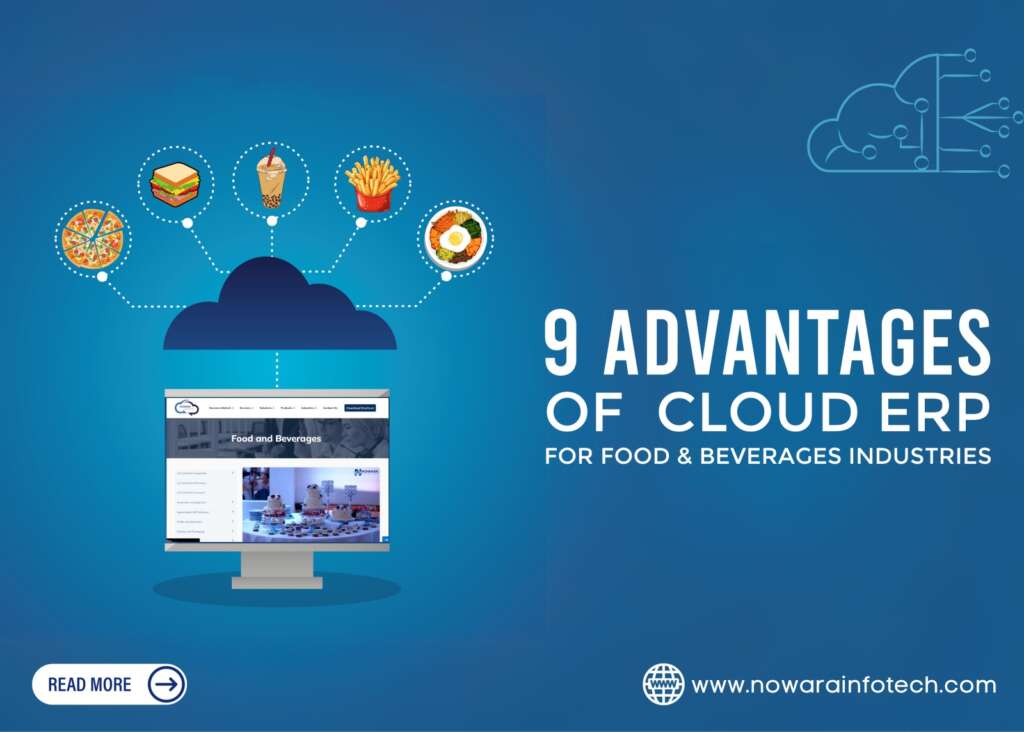
Cloud ERP, or Cloud Enterprise Resource Planning, is a comprehensive software solution hosted on cloud servers, providing businesses with a centralized platform to manage and streamline various processes, from finance and supply chain to human resources and customer relations. Unlike traditional on-premise ERP systems, Cloud ERP for food and beverage industries operates in real-time, promoting accessibility, scalability, and cost-effectiveness. In the food and beverage industry, where precision, compliance, and efficiency are paramount, ERP plays a pivotal role. It integrates various operations seamlessly, from managing the supply chain and inventory to ensuring regulatory compliance and enhancing overall productivity. Advantages of Cloud ERP for Food and Beverage: 5 Benefits of Implementing ERP for Food and Beverages: 1. Enhanced Visibility and Transparency One of the primary benefits of Cloud ERP is its ability to provide unparalleled visibility and transparency across the entire food supply chain. Real-time insights into inventory, production, and distribution processes ensure that stakeholders have accurate information at their fingertips, fostering a new era of informed decision-making. 2. Improved Traceability for Compliance In the food and beverage industry, traceability is not just a requirement; it’s a necessity. Cloud ERP systems introduce advanced traceability features, enabling businesses to track ingredients and products with precision. This not only ensures compliance with stringent industry standards but also establishes a robust foundation for building consumer trust. 3. Optimized Inventory Management Cloud ERP for food and beverage industries revolutionizes inventory management in the food sector. By automating and streamlining inventory processes, businesses can prevent wastage, reduce carrying costs, and maintain optimal stock levels. This level of precision is crucial in an industry where fluctuations in demand and supply can significantly impact operations. 4. Efficient Compliance Management Navigating the intricate landscape of food industry regulations is simplified with Cloud ERP. The system automates compliance processes, ensuring that businesses stay up-to-date with evolving regulations. This not only minimizes the risk of regulatory penalties but also contributes to a culture of accountability and responsibility. 5. Flexibility and Scalability In an industry marked by seasonal variations and market trends, the flexibility and scalability offered by Cloud ERP are invaluable. Unlike traditional ERP systems, Cloud ERP allows businesses to scale their operations seamlessly. This adaptability ensures that food and beverage companies can respond swiftly to market changes and expand their operations without the constraints of traditional infrastructure. As the food and beverage industry continues to evolve, Cloud ERP emerges as a strategic imperative, addressing the unique challenges faced by businesses in this sector. From ensuring compliance and enhancing traceability to optimizing inventory management and fostering scalability, the advantages of Cloud ERP are poised to redefine the way the industry operates. Want to elevate your Food & Beverage business to new heights with tailored ERP solutions from Nowara Infotech? Unlock efficiency, transparency, and growth in the food and beverage industry sectors. Contact us today to revolutionize your operations.

 ERP solutions for retail industry

Mastering Inventory Woes: ERP for Retail Industry by Nowara Infotech

Inventory management is the heartbeat of retail businesses, ensuring a seamless flow of products from supplier to customer. According to recent studies, only about 43% of companies use an inventory management system for their operations, highlighting a significant gap in optimizing this critical aspect of business. Challenges in Inventory Management: Businesses struggling with various challenges in inventory management, from overstocking to stockouts. Inaccurate forecasting, manual errors, and inefficient tracking contribute to these issues. Approximately 46% of small businesses face challenges in managing their inventory effectively, Inaccurate Forecasting: Predicting demand accurately is a perpetual challenge, leading to overstocking or stockouts and ERP for retail industry is the perfect solutions for all these challenges. Inventory Management’s Impact on Customer Satisfaction: Customer satisfaction is directly tied to inventory management. When products are readily available, customers experience smooth transactions and timely deliveries. In contrast, inconsistencies in inventory levels can lead to delays, backorders, and dissatisfaction. Studies reveal that 60% of customers consider inventory visibility crucial for their purchasing decisions in retail industries. Consequences of Poor Inventory Management: Poor inventory management is a domino effect that impacts the entire supply chain. From delayed order fulfillment to increased holding costs, businesses bear the brunt of inadequate inventory controls. Moreover, a staggering 43% of businesses face challenges in managing their inventory efficiently, leading to decreased profitability and a tarnished brand image. Stockouts in Inventory Management: Stockouts, a common woe in inventory management, occur when products are not available when customers demand them. This results in lost sales opportunities, frustrated customers, and damage to the brand’s reputation. A whopping 62% of businesses report experiencing stockouts, showcasing the urgency for effective inventory management solutions. Microsoft Dynamics 365 BC ERP: The Solution for Retail Inventory Woes: To address these challenges, businesses turn to ERP solutions, with Microsoft Dynamics 365 Business Central (BC) emerging as a game-changer. This robust microsoft dynamics 365 for retail streamlines inventory processes, enhances accuracy, and provides real-time visibility into stock levels. With Dynamics 365 BC ERP, businesses can optimize order fulfilment, reduce stockouts, and improve overall customer satisfaction. Solving Inventory Issues with Microsoft Dynamics 365 BC ERP: Nowara Infotech – Your ERP Solution Provider for Retail Industries: As a Microsoft-certified partner, Nowara Infotech specializes in providing ERP solutions for retail industry tailored for the retail industry. Our expertise lies in implementing Microsoft Dynamics 365 BC ERP to address inventory challenges, ensuring seamless operations and customer satisfaction. Explore the transformative power of ERP for your retail business with Nowara Infotech – Your trusted ERP partner. Learn more about our ERP solutions for retail industries at Nowara Infotech. Elevate your business with Microsoft Dynamics 365 BC ERP – the key to streamlined inventory management and enhanced customer satisfaction. Contact us today!

Microsoft Dynamics CRM

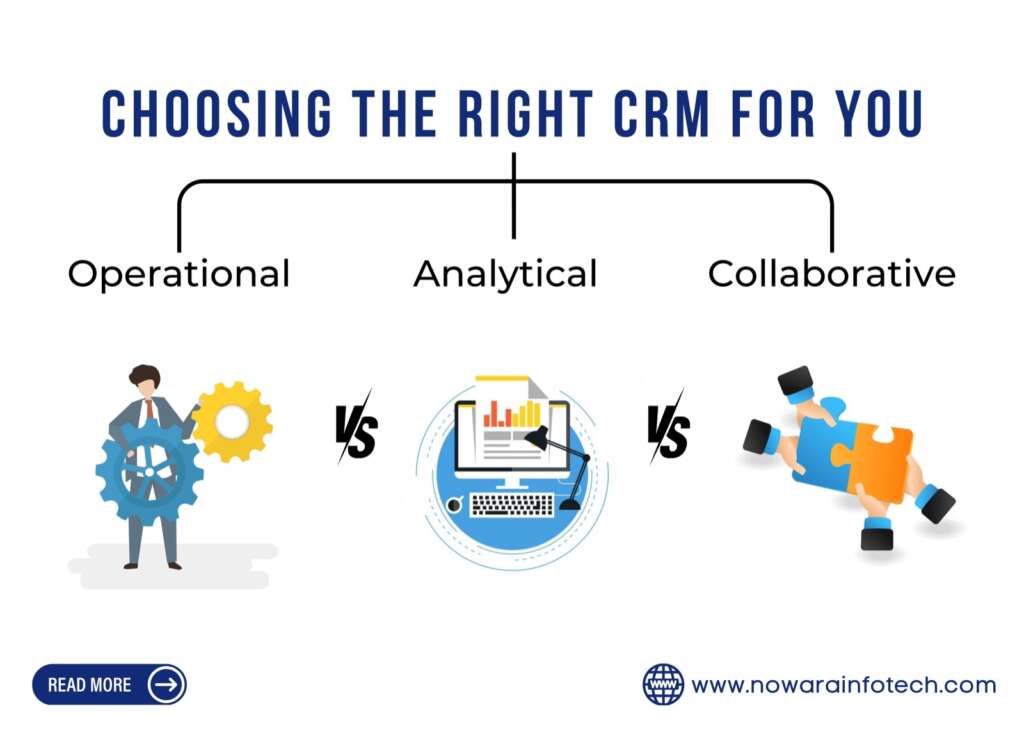
Choosing the Right CRM for You: Operational vs. Analytical vs. Collaborative

Choosing the right Customer Relationship Management (CRM) system is like picking the heart of your business – it powers how you interact with customers. There are three main types: Operational, Analytical, and Collaborative CRM. Each has its strengths, affecting how you streamline operations, analyze data, and collaborate within your business. In simpler terms, it’s about finding the perfect tool to make your customer relations smoother, your decision-making smarter, and your teamwork more seamless. Join us as we explore these CRM types and help you discover which one is the perfect match for your business. Welcome to the world of choosing a Microsoft Dynamics CRM that makes your customer interactions a breeze! What is Operational vs Analytical vs Collaborative CRM? Navigating the landscape of Customer Relationship Management (CRM) systems involves understanding the distinct roles played by Operational, Analytical, and Collaborative CRM. These three pillars are essential components that cater to different dimensions of customer interaction and business processes. Operational CRM: Operational CRM focuses on streamlining and automating daily customer-facing processes. It involves tools for sales automation, marketing automation, and service automation. This type of CRM is designed to enhance efficiency in customer interactions, making it an excellent choice for businesses that prioritize smooth, customer-centric operations. Analytical CRM: Analytical CRM revolves around data analysis and interpretation. It delves deep into customer data to derive valuable insights. By leveraging analytics tools, businesses can gain a profound understanding of customer behaviors and preferences. Analytical CRM is crucial for strategic decision-making, helping businesses refine their marketing strategies and improve overall customer satisfaction. Collaborative CRM: Collaborative CRM emphasizes communication and interaction between different departments within a company. It facilitates the sharing of customer information across departments, ensuring a holistic view of customer interactions. This type of CRM is instrumental in enhancing collaboration, breaking down silos, and fostering a unified approach to customer management. How do I choose the right CRM? Choosing the right CRM involves a thorough assessment of your business needs and goals. Consider the following factors: What are the 3 key types of Microsoft Dynamics CRM systems? Challenges Microsoft Dynamics CRM Can Help With Choose Nowara Infotech for Your CRM Needs Elevate your CRM experience with Microsoft Dynamics CRM offered by Nowara Infotech, a Microsoft Certified Partner providing cutting-edge solutions built on LS Central and Business Central. With a global footprint and a track record of excellence, Nowara Infotech is your trusted CRM provider. Contact us now for a customized CRM solution that aligns with your business goals.