
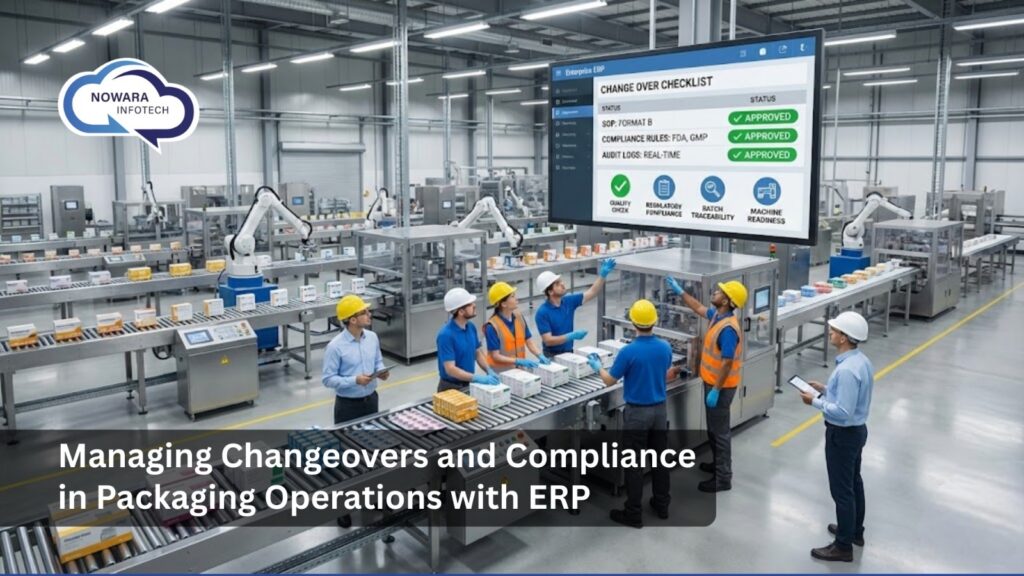
In today’s packaging industry, speed and accuracy decide profitability. Whether you operate in FMCG, pharmaceuticals, food & beverage, or consumer goods, packaging plants face two constant challenges:
- Frequent changeovers due to multiple SKUs, pack sizes, and formats
- Strict compliance requirements driven by regulations, audits, and customer expectations
Managing both through manual processes or disconnected systems leads to delays, errors, downtime, and compliance risks. This is where an ERP (Enterprise Resource Planning) system becomes a critical operational backbone.
This blog explains how ERP helps packaging businesses manage changeovers efficiently while staying compliant—without slowing production.
The Reality of Changeovers in Packaging Operations
A changeover happens when a packaging line switches from one product, size, label, or format to another. In high-mix packaging environments, changeovers can happen multiple times per shift.
Common Changeover Challenges
- Machine setup delays
- Incorrect packaging materials loaded
- Manual instruction errors
- Unplanned downtime
- Inconsistent documentation
- Poor coordination between production, stores, and quality teams
Even a 10–15 minute delay per changeover, when multiplied across lines and shifts, results in major productivity losses over time.
Why Compliance Is Non-Negotiable in Packaging
Packaging compliance is mandatory—especially in regulated industries like food and pharmaceuticals.
Typical Compliance Requirements
- Correct labeling and barcode standards
- Batch and lot traceability
- Expiry date accuracy
- Regulatory documentation
- Audit-ready production records
- Change control approvals
Without system-driven control, compliance depends on manual checks, increasing the risk of:
- Product recalls
- Regulatory penalties
- Shipment rejections
- Brand reputation damage
Where Traditional Systems Fail
Many packaging plants still rely on:
- Excel-based production planning
- Paper-based changeover instructions
- Standalone quality systems
- Manual compliance logs
This creates data silos, where teams work with different information, leading to:
- Delayed approvals
- Miscommunication
- Incomplete audit trails
- Costly rework
How ERP Improves Changeover Management
An ERP system brings structure, visibility, and control to packaging operations.
1. Standardized Changeover Workflows
ERP allows businesses to define pre-approved changeover procedures for each SKU, including:
- Machine setup steps
- Tool and die requirements
- Packaging material lists
- Quality checkpoints
Operators follow system-guided instructions, reducing errors and dependency on experience.
2. Automated Production Scheduling
ERP optimizes production plans by:
- Grouping similar SKUs
- Reducing unnecessary changeovers
- Sequencing jobs based on setup similarity
This directly reduces setup time, line stoppages, and material wastage.
3. Real-Time Material Availability
ERP ensures:
- Accurate packaging BOMs
- Real-time inventory visibility
- Automatic material reservations
- Alerts for shortages before changeovers begin
This eliminates last-minute delays on the shop floor.
ERP’s Role in Packaging Compliance
End-to-End Traceability
ERP links raw materials, packaging components, production batches, and finished goods, enabling instant forward and backward traceability during audits or recalls.
Built-In Quality Controls
ERP enforces quality checks through:
- Pre-changeover approvals
- In-process inspections
- Final packaging validation
If a parameter fails, ERP can automatically block production and trigger corrective actions.
Audit-Ready Documentation
ERP automatically records:
- Who performed the changeover
- When it occurred
- Which materials were used
- Which quality checks were completed
No manual paperwork. No missing records. Always audit-ready.
Reducing Downtime Without Compromising Compliance
A common myth is that compliance slows production.
In reality, ERP reduces downtime by eliminating manual errors, automating approvals, and improving visibility—preventing rework and last-minute corrections.
Key Business Benefits for Packaging Companies
Operational Benefits
- Faster changeovers
- Reduced line downtime
- Lower material wastage
- Better equipment utilization
Compliance & Risk Benefits
- Complete documentation
- Faster audits
- Lower recall risk
- Regulatory confidence
Management Benefits
- Real-time dashboards
- Accurate performance metrics
- Data-driven decisions
- Scalable operations
ERP as a Competitive Advantage in Packaging
Today, packaging companies are evaluated not just on cost, but on speed, accuracy, reliability, and compliance.
An ERP system transforms packaging operations from reactive firefighting to controlled execution, making businesses more trusted by customers and better prepared for growth.